Overview
Poland operates two Clean Transport Zones (Strefy Czystego Transportu, SCT) in its largest cities: Krakow and Warsaw. These zones restrict access to vehicles that do not meet minimum Euro emission standards, with the goal of improving air quality in urban centres.
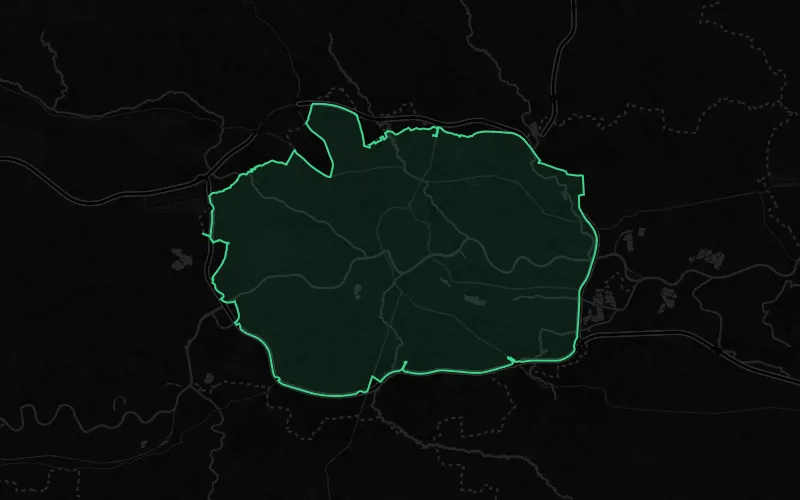
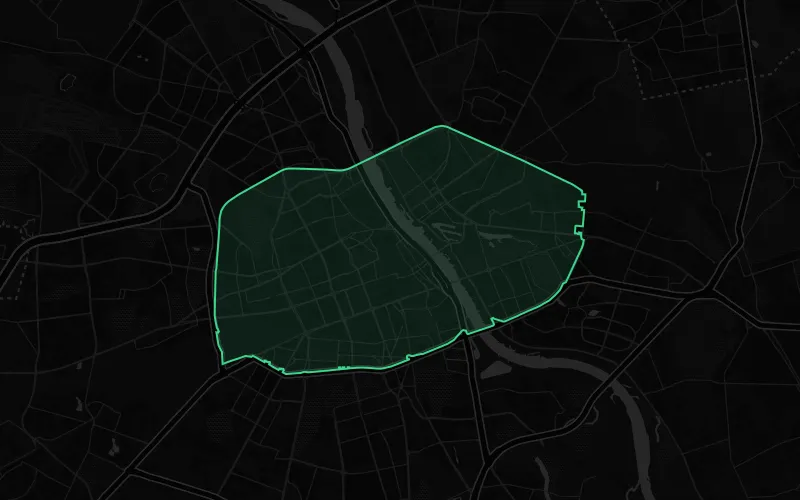
Warsaw launched the first SCT in Poland on July 1, 2024, covering most of the city centre and parts of surrounding districts. Krakow's SCT took effect on January 1, 2026, covering roughly the area within the city's fourth ring road. Both zones are enforced through ANPR camera systems and require foreign-registered vehicles to register before entry.
Regulations
Each Polish SCT has its own specific emission requirements that differ by fuel type and vehicle category:
Krakow SCT (from January 1, 2026): Passenger cars and vans up to 3.5 tonnes require Euro 4 for petrol (from model year 2005) and Euro 6 for diesel (from model year 2014). Heavy vehicles over 3.5 tonnes follow the same Euro standards. Krakow residents who owned their vehicles before the regulation took effect receive an indefinite exemption after registering in the SCT system. Non-compliant, non-resident vehicles may enter by paying hourly or daily fees during a 3-year transition period (2026–2028).
Warsaw SCT (second phase from January 1, 2026): Petrol vehicles (including LPG) must be no older than 26 years or meet at least Euro 3. Diesel vehicles must be no older than 17 years or meet at least Euro 5. Registered Warsaw residents who pay taxes in the capital are exempt for the first 3.5 years.
All foreign-registered vehicles must register before their first entry into either zone. Electric, hydrogen, and historic vehicles are exempt in both cities.
Who must comply
The SCT restrictions apply to all motor vehicles including passenger cars, vans, trucks, and buses. Specific requirements vary by zone and vehicle type.
- Petrol vehicles (Krakow): Euro 4 or newer (model year 2005+)
- Diesel vehicles (Krakow): Euro 6 or newer (model year 2014+ for cars, 2012+ for heavy vehicles)
- Petrol / LPG vehicles (Warsaw): Euro 3 or newer, or less than 26 years old
- Diesel vehicles (Warsaw): Euro 5 or newer, or less than 17 years old
- Foreign vehicles: Must register before first entry in both zones
- Electric, hydrogen & historic vehicles: Exempt in both zones
- Disabled persons: Exempt with valid disability parking card
Zones — 2
Frequently asked questions
Check your vehicle compliance
Use our API to instantly verify if your vehicle can enter Poland's Clean Transport Zones in Krakow and Warsaw.
API Reference →